
Penal Law

Alexandre Lacroix · September 4, 2026 · 8 min read
Exceeding the speed limit exposes a driver to a fine calculated in 5 km/h increments, to demerit points and, in the case of a major speeding offence, to an immediate suspension of their driver’s licence and to doubled penalties. A statement of offence for excessive speeding is not a conviction, however: it can be contested through a specific procedure. Me Alexandre Lacroix can help you should you face such charges.
The basis of the offence
Section 328 of the Highway Safety Code sets the speed limits applicable in Québec: 100 km/h on highways, 90 km/h on paved roads, 70 km/h on gravel roads and 50 km/h in built-up areas, unless signage indicates a different limit. Anyone who exceeds the applicable limit commits an offence and is liable to the fine set out in section 516 of the Code, calculated according to the number of complete 5 km/h increments above the permitted speed, as well as to the recording of demerit points on their driving record.
The Code also provides, in section 327, that any speed liable to endanger human life or safety or property is prohibited, even where the posted limit is not exceeded. This provision targets in particular driving that is too fast given weather conditions, the state of the road surface or traffic density. In addition, section 516.2 doubles the fine for any speeding offence committed in a school zone during the school period.
The major speeding offence
Beyond a certain threshold, speeding becomes a « major speeding offence » within the meaning of sections 328.1 and 516.1 of the Highway Safety Code. In concrete terms, driving at 90 km/h in a 50 km/h zone, at 140 km/h in a 90 km/h zone or at 160 km/h on the highway constitutes a major speeding offence.
The consequences are then considerably heavier: the fine is doubled, the demerit points are doubled and the officer suspends the driver’s licence on the spot for a period of seven days, even before any trial is held. That suspension is increased to 30 days if the driver has already been found guilty of a major speeding offence within the previous ten years, and to 60 days where there has been more than one prior finding of guilt for a major speeding offence committed in a zone of 60 km/h or less. Finally, a person who has been the subject of more than two findings of guilt for a major speeding offence within the previous ten years has their fine tripled.

Speed evidence that is presumed accurate
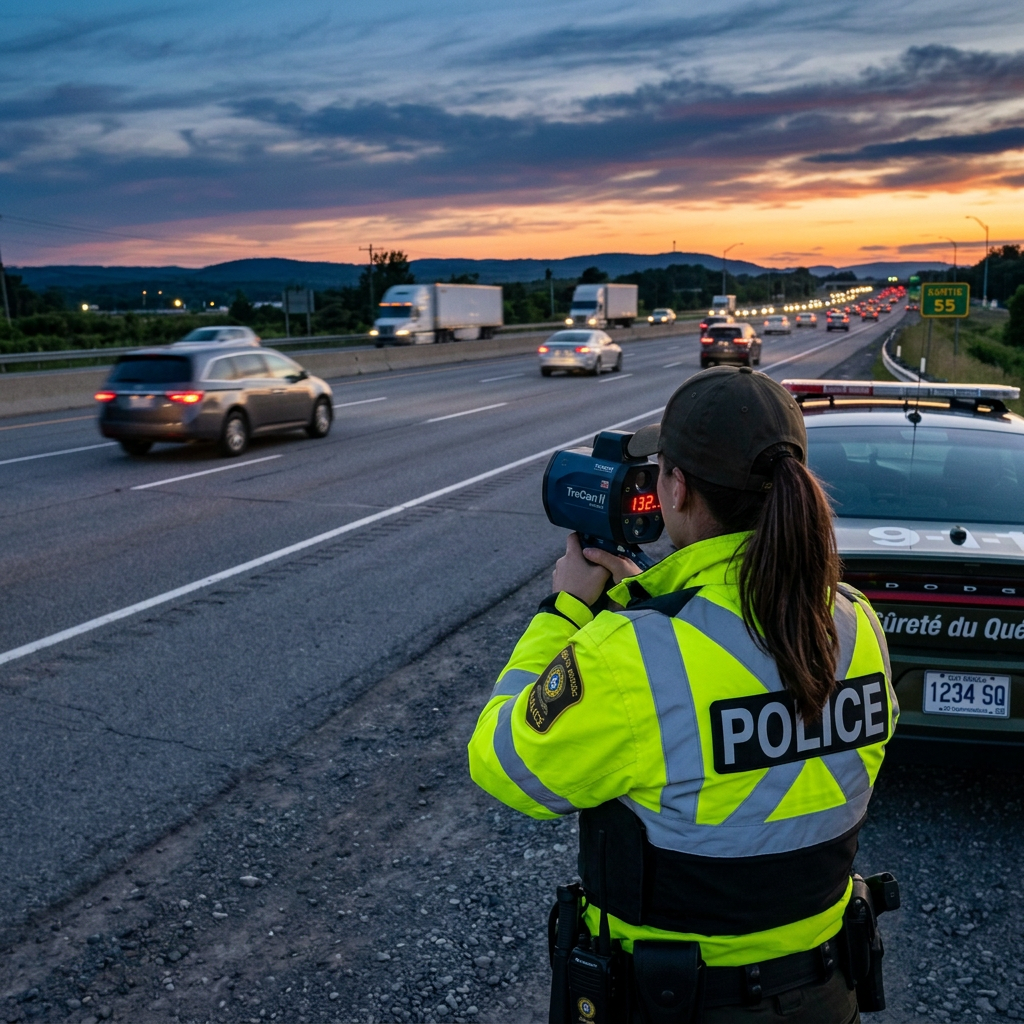
The speed alleged is most often measured with a speed-measuring device, commonly called radar, whether fixed, mobile or laser. In some cases, the officer instead establishes the speed by following the vehicle with their patrol car; this particular method, known as the pacing technique, is the subject of a separate article on our site.
Whatever the device used, the courts do not require the prosecution to demonstrate at the outset that the instrument was working perfectly. In Procureur général du Québec c. Robitaille, 1991 CanLII 3772 (QC CA), Justice Dubé recalls that a judge of the Court of Appeal had already refused leave to appeal on this question:
(…) Justice Bernier, sitting as a single judge, refused leave to appeal on this question, stating: ‘that the speed established by a radar device was sufficient prima facie evidence’ (…) [Our translation]
Justice Dubé then restates the general principle applicable in penal matters, as formulated by Justice Bernier:
In criminal law, it is settled that, on the Crown’s part, prima facie evidence that is believed and not contradicted is sufficient, and that the Crown is not required to cover in advance, in its evidence, the accused’s possible defences [Our translation]
In practice, this means that the officer’s testimony as to the measured speed will be enough to convict the driver if that testimony is found credible and nothing contradicts it. A driver who wishes to contest must therefore raise a reasonable doubt, which presupposes serious preparation of the file.
Grounds for contesting
Several aspects of a statement of offence for excessive speeding are worth checking before deciding to plead guilty:
- Identification of the vehicle: in heavy traffic or on a multi-lane road, the officer must be able to state that the speed captured by the radar is indeed that of the vehicle pulled over, and not that of a neighbouring vehicle.
- The content of the ticket: an error as to the date, the location, the speed limit or the provision relied on may, depending on its seriousness, help in negotiating the file.
Bear in mind that paying the fine amounts to a guilty plea and automatically entails the recording of demerit points on the driving record. It is therefore preferable to assess the options before making any payment.
The practical steps of a contestation
Contesting a statement of offence for excessive speeding is governed by the Code of Penal Procedure and follows specific steps:
- File a plea of not guilty within 30 days of receiving the statement of offence, by completing the section provided for that purpose, without paying the fine.
- Appear at trial, or be represented there by a lawyer, in order to cross-examine the officer, point out the weaknesses in the evidence and, where appropriate, negotiate a reduction of the offence charged.
Even in the case of a major speeding offence, where the seven-day suspension applies from the moment of the stop, contesting remains decisive: it makes it possible to avoid the doubled fine, the doubled demerit points and the repercussions on insurance premiums and the driving record.
The penalties incurred
The consequences of speeding vary according to the speed limit of the zone and the extent of the excess. The fine increases in 5 km/h increments and the demerit points rise in stages, up to 18 points in the most serious cases. The table below, taken from Schedule 1 of the annotated Highway Safety Code, sets out the fines and demerit points applicable according to the speed recorded:
Fines and demerit points for speeding offences
Statements of offence issued as of April 1, 2008
| 30 km/h | 40 km/h | 50 km/h | 60 km/h | Fines ($) | Demerit points |
|---|---|---|---|---|---|
| 35 – 39 | 45 – 49 | 55 – 59 | 65 – 69 | 25.00 | 0 |
| 40 | 50 | 60 | 70 | 35.00 | 0 |
| 41 – 44 | 51 – 54 | 61 – 64 | 71 – 74 | 35.00 | 1 |
| 45 – 49 | 55 – 59 | 65 – 69 | 75 – 79 | 45.00 | 1 |
| 50 | 60 | 70 | 80 | 55.00 | 1 |
| 51 – 54 | 61 – 64 | 71 – 74 | 81 – 84 | 75.00 | 2 |
| 55 – 59 | 65 – 69 | 75 – 79 | 85 – 89 | 90.00 | 2 |
| 60 | 70 | 80 | 90 | 105.00 | 2 |
| 61 – 64 | 71 – 74 | 81 – 84 | 91 – 94 | 135.00 | 3 |
| 65 – 69 | 75 – 79 | 85 – 89 | 95 – 99 | 155.00 | 3 |
| 70 – 74 | 80 – 84 | 90 – 94 | 100 – 104 | 350.00 | 6 |
| 75 | 85 | 95 | 105 | 390.00 | 6 |
| 76 – 79 | 86 – 89 | 96 – 99 | 106 – 109 | 480.00 | 10 |
| 80 – 84 | 90 – 94 | 100 – 104 | 110 – 114 | 530.00 | 10 |
| 85 – 89 | 95 – 99 | 105 – 109 | 115 – 119 | 580.00 | 10 |
| 90 | 100 | 110 | 120 | 630.00 | 10 |
| 91 – 94 | 101 – 104 | 111 – 114 | 121 – 124 | 750.00 | 14 |
| 95 – 99 | 105 – 109 | 115 – 119 | 125 – 129 | 810.00 | 14 |
| 100 – 104 | 110 – 114 | 120 – 124 | 130 – 134 | 870.00 | 14 |
| 105 – 109 | 115 – 119 | 125 – 129 | 135 – 139 | 930.00 | 14 |
| 110 | 120 | 130 | 140 | 990.00 | 14 |
| 111 – 114 | 121 – 124 | 131 – 134 | 141 – 144 | 990.00 | 18 |
| 115 – 119 | 125 – 129 | 135 – 139 | 145 – 149 | 1,050.00 | 18 |
| 120 – 124 | 130 – 134 | 140 – 144 | 150 – 154 | 1,110.00 | 18 |
| 125 – 129 | 135 – 139 | 145 – 149 | 155 – 159 | 1,170.00 | 18 |
| 130 | 140 | 150 | 160 | 1,230.00 | 18 |
| 70 km/h | 80 km/h | 90 km/h | Fines ($) | Demerit points |
|---|---|---|---|---|
| 75 – 79 | 85 – 89 | 95 – 99 | 25.00 | 0 |
| 80 | 90 | 100 | 35.00 | 0 |
| 81 – 84 | 91 – 94 | 101 – 104 | 35.00 | 1 |
| 85 – 89 | 95 – 99 | 105 – 109 | 45.00 | 1 |
| 90 | 100 | 110 | 55.00 | 1 |
| 91 – 94 | 101 – 104 | 111 – 114 | 75.00 | 2 |
| 95 – 99 | 105 – 109 | 115 – 119 | 90.00 | 2 |
| 100 | 110 | 120 | 105.00 | 2 |
| 101 – 104 | 111 – 114 | 121 – 124 | 135.00 | 3 |
| 105 – 109 | 115 – 119 | 125 – 129 | 155.00 | 3 |
| 110 – 114 | 120 – 124 | 130 – 134 | 175.00 | 3 |
| 115 | 125 | 135 | 195.00 | 3 |
| 116 – 119 | 126 – 129 | 136 – 139 | 240.00 | 5 |
| 120 – 124 | 130 – 134 | 140 – 144 | 530.00 | 10 |
| 125 – 129 | 135 – 139 | 145 – 149 | 580.00 | 10 |
| 130 | 140 | 150 | 630.00 | 10 |
| 131 – 134 | 141 – 144 | 151 – 154 | 750.00 | 14 |
| 135 – 139 | 145 – 149 | 155 – 159 | 810.00 | 14 |
| 140 – 144 | 150 – 154 | 160 – 164 | 870.00 | 14 |
| 145 – 149 | 155 – 159 | 165 – 169 | 930.00 | 14 |
| 150 | 160 | 170 | 990.00 | 14 |
| 151 – 154 | 161 – 164 | 171 – 174 | 990.00 | 18 |
| 155 – 159 | 165 – 169 | 175 – 179 | 1,050.00 | 18 |
| 160 – 164 | 170 – 174 | 180 – 184 | 1,110.00 | 18 |
| 165 – 169 | 175 – 179 | 185 – 189 | 1,170.00 | 18 |
| 170 | 180 | 190 | 1,230.00 | 18 |
| 100 km/h | Fines ($) | Demerit points |
|---|---|---|
| 105 – 109 | 25.00 | 0 |
| 110 | 35.00 | 0 |
| 111 – 114 | 35.00 | 1 |
| 115 – 119 | 45.00 | 1 |
| 120 | 55.00 | 1 |
| 121 – 124 | 75.00 | 2 |
| 125 – 129 | 90.00 | 2 |
| 130 | 105.00 | 2 |
| 131 – 134 | 135.00 | 3 |
| 135 – 139 | 155.00 | 3 |
| 140 – 144 | 175.00 | 3 |
| 145 | 195.00 | 3 |
| 146 – 149 | 240.00 | 5 |
| 150 – 154 | 265.00 | 5 |
| 155 – 159 | 290.00 | 5 |
| 160 | 630.00 | 10 |
| 161 – 164 | 750.00 | 14 |
| 165 – 169 | 810.00 | 14 |
| 170 – 174 | 870.00 | 14 |
| 175 – 179 | 930.00 | 14 |
| 180 | 990.00 | 14 |
| 181 – 184 | 990.00 | 18 |
| 185 – 189 | 1,050.00 | 18 |
| 190 – 194 | 1,110.00 | 18 |
| 195 – 199 | 1,170.00 | 18 |
| 200 | 1,230.00 | 18 |
Major speeding offences (ss. 328.1 and 516.1 of the Highway Safety Code; ss. 6.1, 6.2 and 6.3 of the Regulation respecting demerit points)
To the fines indicated are added the costs and the penal contribution provided for by law. Demerit points remain on the record for two years from the finding of guilt and may lead to the revocation of the licence once the threshold applicable to the driver is reached: 4 points for a learner’s or probationary licence, 8 points for a driver under 23, 12 points for a driver aged 23 to 24 and 15 points for a driver aged 25 or over. The table below summarizes the immediate suspensions provided for in section 328.1 in the case of a major speeding offence:
| Situation | Immediate licence suspension |
|---|---|
| First major speeding offence | 7-day suspension |
| Repeat offence within the previous 10 years | 30-day suspension |
| More than one repeat offence within the previous 10 years (zone of 60 km/h or less) | 60-day suspension |
A free information session with Me Alexandre Lacroix
Between the fine, the demerit points, the rise in insurance premiums and the risk of losing one’s licence, the real cost of a speeding offence far exceeds the amount written on the ticket. Before paying, it is worth having your file reviewed. Me Alexandre Lacroix offers a free, no-obligation information session to assess the prosecution’s evidence and the options available to you.
This blog post is provided for general informational purposes only and does not constitute legal advice. Every situation is unique — consult a legal professional for advice tailored to your case.
 Speeding: The Pacing Technique
 Cellphone Use While Driving
 Police Stops and Section 636 of the Highway Safety Code
Laisser un commentaire